My Advice · 31 October 2026 · 4 min read
How I Run Seven Businesses at Once
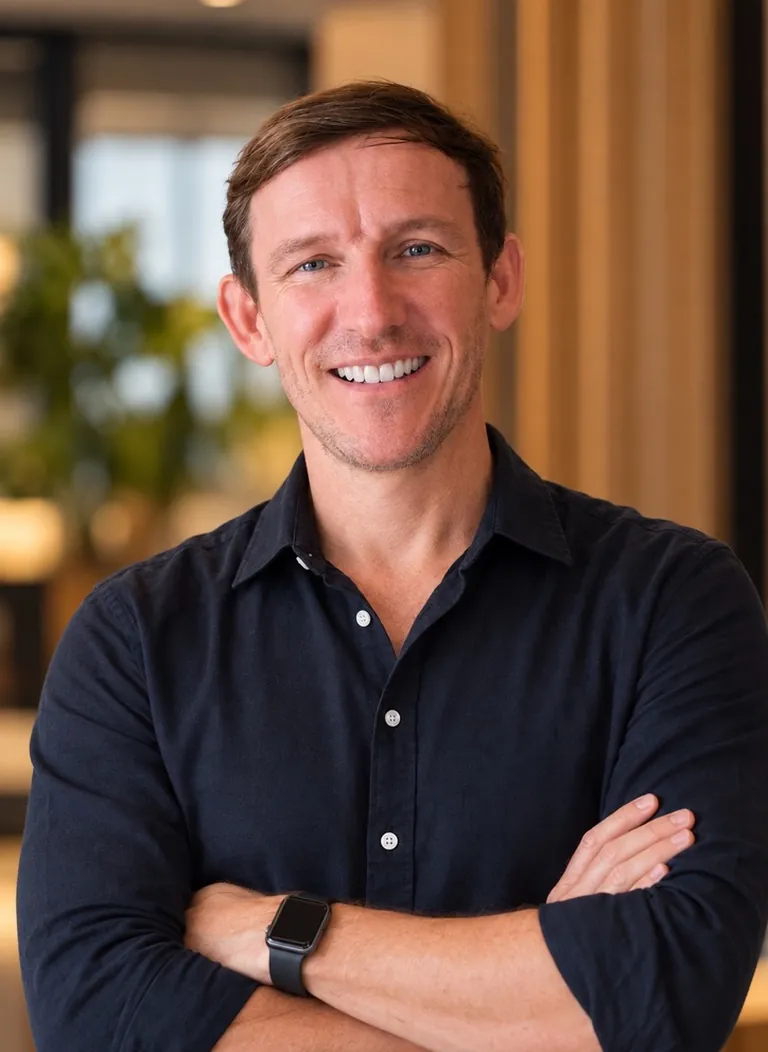 By Shane Ruddle
People often ask how I run seven businesses at the same time. The honest answer is that I don't run them day to day. I've built things so I don't have to.
What does a typical week look like?
Mostly talking to my managers. Every business has one manager who is my single point of contact. I deliberately don't make myself available to everyone else in the businesses.
The rest of my time goes into building software systems: using AI to make things more efficient, building features I think will help, and then getting the managers, and through them the staff, to use them.
Why only go through the manager?
Because otherwise it gets confusing. I learned that at Hemingways Jomtien. One of the partners would come in every couple of weeks, look around and ask why this or that wasn't done. Coming in only every two weeks, he couldn't see where we were or what everyone's role was. He was only seeing a snapshot.
It became clear to me that decisions about a business should be made by the people working in it every day. Owners and partners should sit above that and focus on strategy and direction. So I deliberately set up a clear hierarchy and made sure nobody skips a level.
How do I choose a manager?
Nearly always through a recommendation. It's very hard to hire people here you don't know. It's also hard to find people you do know who actually want to be a manager, which is one of the more difficult parts of owning a business here.
Given the choice, I look for someone I know in some other way: I've played golf, football or padel with them, I know them through friends of friends, or someone I trust has vouched for them.
How do I keep track of everything?
I used to visit the businesses, get a feel for what was going on, talk to the managers and handle a lot of the money myself. Now systems and AI do most of the checking. Reports and emails come to me, and I can check the software from my phone.
Take Pattaya Rent a Car. I can log on and see which cars are available, how much is in the accounts and what expenses are going out, and get a good sense of what's happening without leaving my phone.
How do I get managers to use new tools?
It depends on the person. The manager at Hemingways Jomtien already uses AI in his own life, so bringing it into the business is easy with him. Some of the other managers have never been keen on technology, even before AI, so with them it's a slower burn.
I introduce a new feature about every couple of weeks to give them time to adapt before the next one. In reality I'm building them a lot faster than that, but I don't ask them to use a new one until I feel the time is right.
What's the biggest mistake I've made?
Assuming other people are as ambitious as I am. About a year ago I built a small team of three. I told them I was very happy with the four of us and wanted to use that team to go out and buy more businesses. None of them work for me now, for different reasons. They just didn't share the vision.
These days I don't really try to build that kind of team. It's very hard to find like-minded people with that energy here. The people I'd want are already doing it for themselves, not working for someone else, and my operations aren't big enough to attract them.
So what fills that gap?
AI. It has taken over a lot of the mundane work: the end-of-month reconciliation, which was always hard work, keeping an eye on expenses, and marketing, which has become much easier.
It even handles some decisions. I used to decide when to raise or lower prices at Pattaya Rent a Car, and that pricing was key to getting the cars out. That's all automated now.
My advice if you're taking on a second or third business
Leverage AI. That's the only way I'd do it these days. Get deep into it and learn all the small time-saving things it can do.
I've written a deeper piece on how I use AI in my businesses. If you've never used it, just start. Talk to ChatGPT or Claude, ask it questions, try making some graphics, and play around with it every day until something clicks.
For how it all started, read from bar manager to seven businesses, and for the people side, managing Thai staff and starting or buying a business in Pattaya.